Made By Mobbs · planning a deck
Deck Cost Guide
A plain-English guide to what a deck actually costs in Melbourne. Understand what influences the price, why two quotes for the “same” deck can be miles apart, and how to pick a build that is still solid in ten years rather than the one that was cheapest to put down.
Estimate Your Decking Construction Cost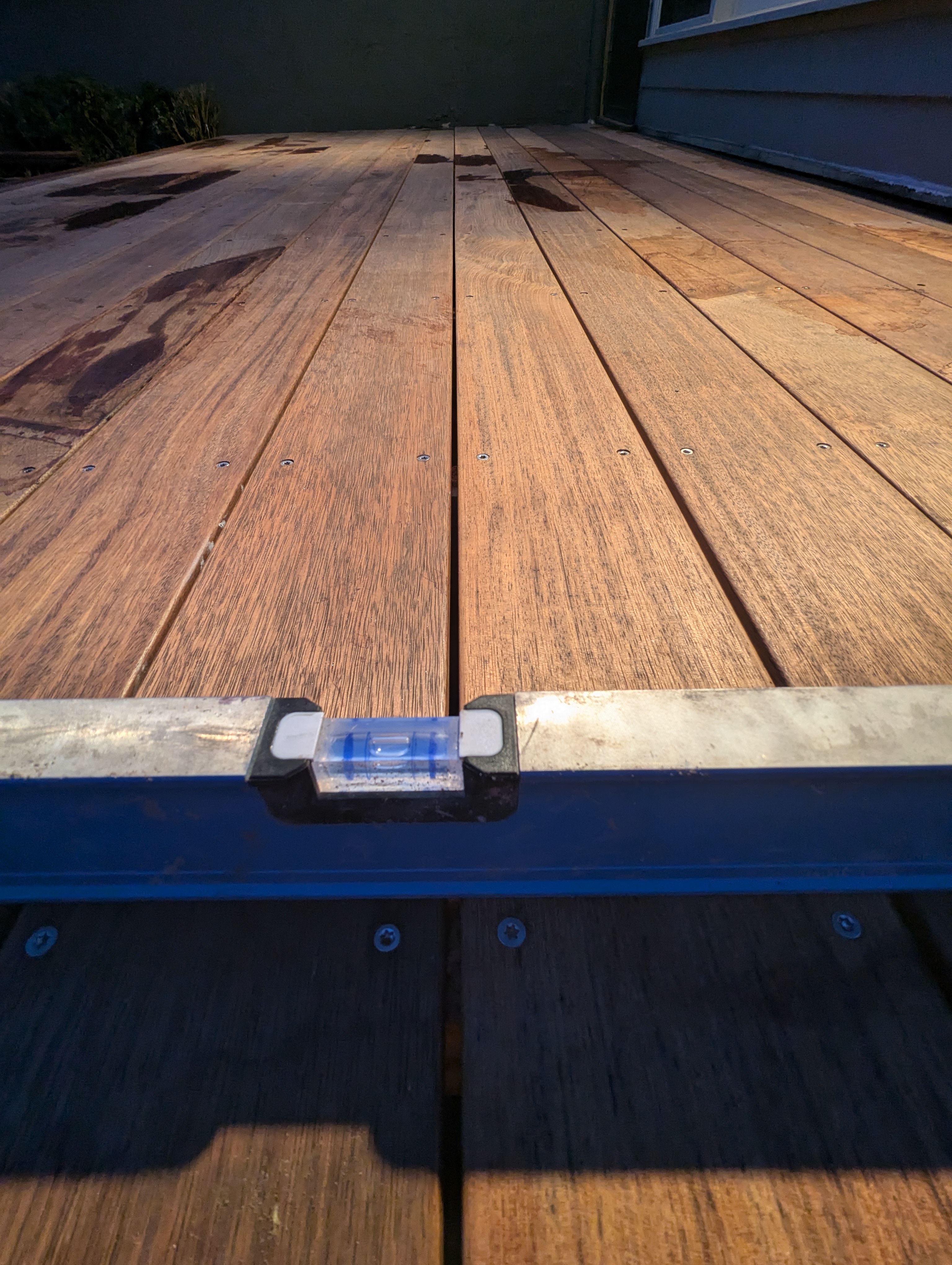
A deck price is mostly structure, not boards
The boards you can see makes a deck look good, but what's below matters just as much. Footings, bearers, joists, the height off the ground, the ground itself and how a truck gets to the backyard usually decide the number long before anyone picks a board. Once you understand that, a stack of quotes starts to make sense — and the suspiciously cheap one usually gives itself away.
This guide walks through what affects deck cost, why cheap decks tend to cost more later, and the questions worth asking before you sign anything.
Melbourne deck cost bands (guide only)
All guide prices below are including GST. Treat these as broad planning ranges for properly built Melbourne decks, not fixed quotes.
- Very small deck from around $4,000 for approximately 6m².
- Basic ground-level timber deck $495-$770+/m², with many typical small decks landing around $6,000-$8,000.
- Properly detailed hardwood deck Many worthwhile projects sit around $12,000-$15,000+ once framing, fixings, finishing and access are allowed for.
Start with the guide that matches your question
Cost, timber, materials, pool decks and common mistakes — each page goes deep on one part of the job so you can read a quote properly and compare builders on the same scope.
-
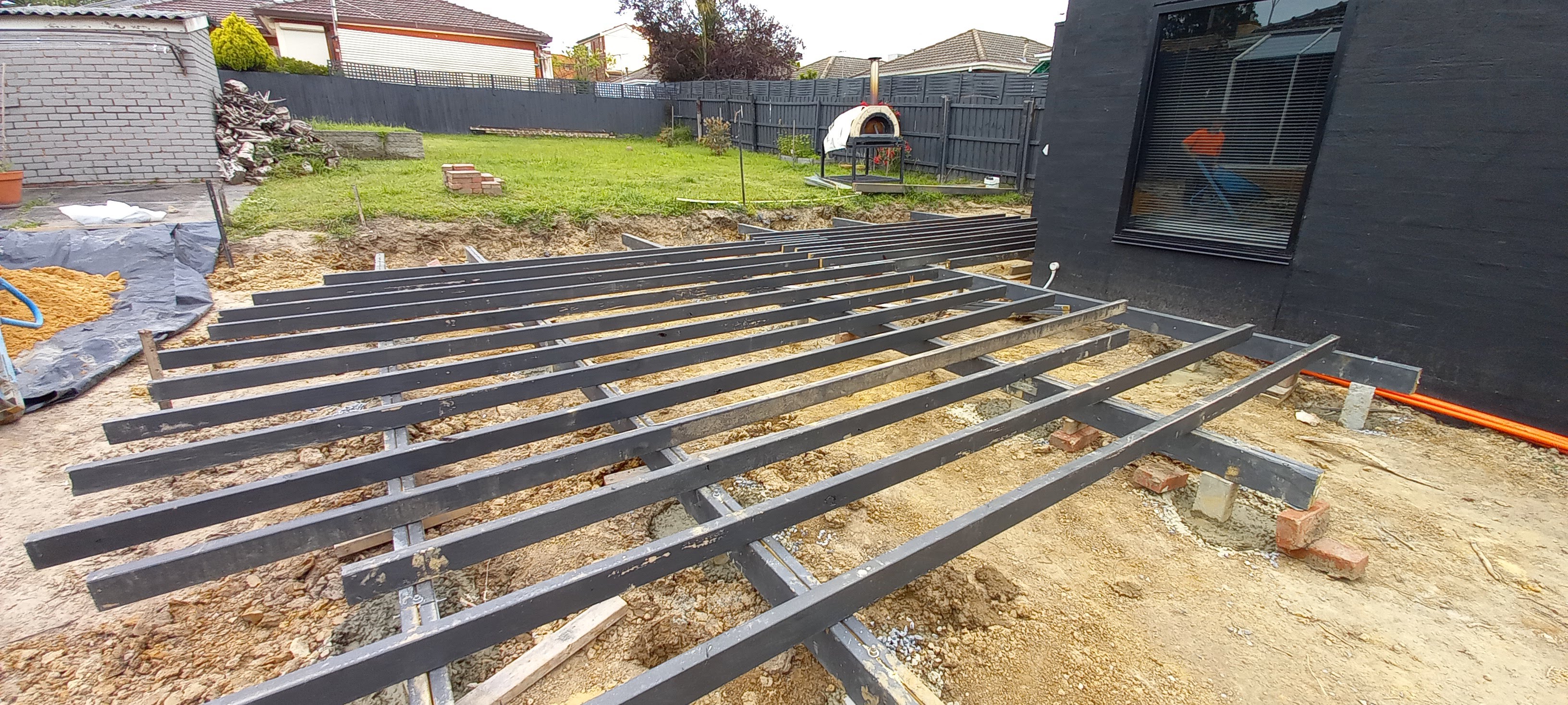
Decking cost in Melbourne
What actually moves a deck quote — size, height, access, subframe and finish — and why two quotes can be miles apart.
Read guide → -
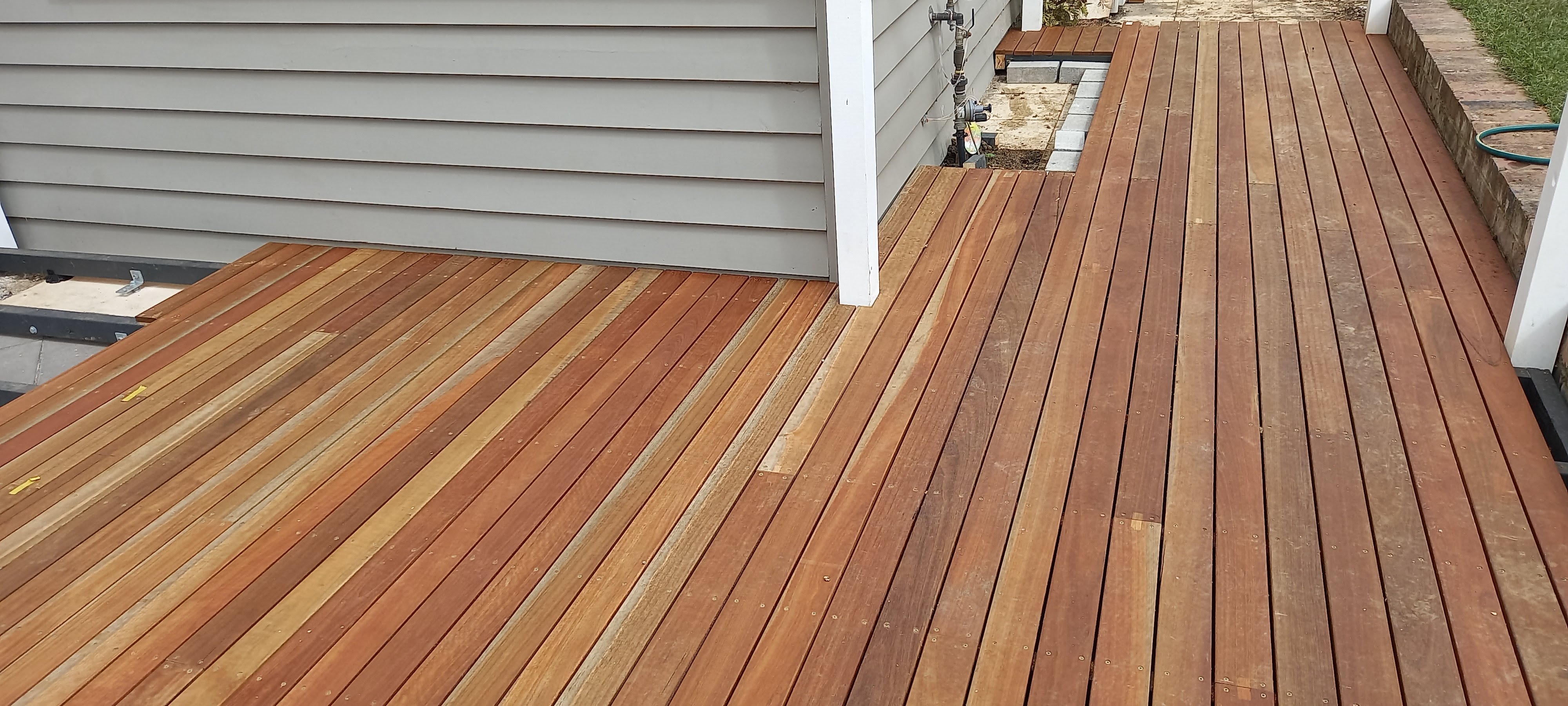
What drives timber decking cost
Species, board profile, fixings and finishing — and why the cheapest timber rarely works out cheapest over the life of the deck.
Read guide → -
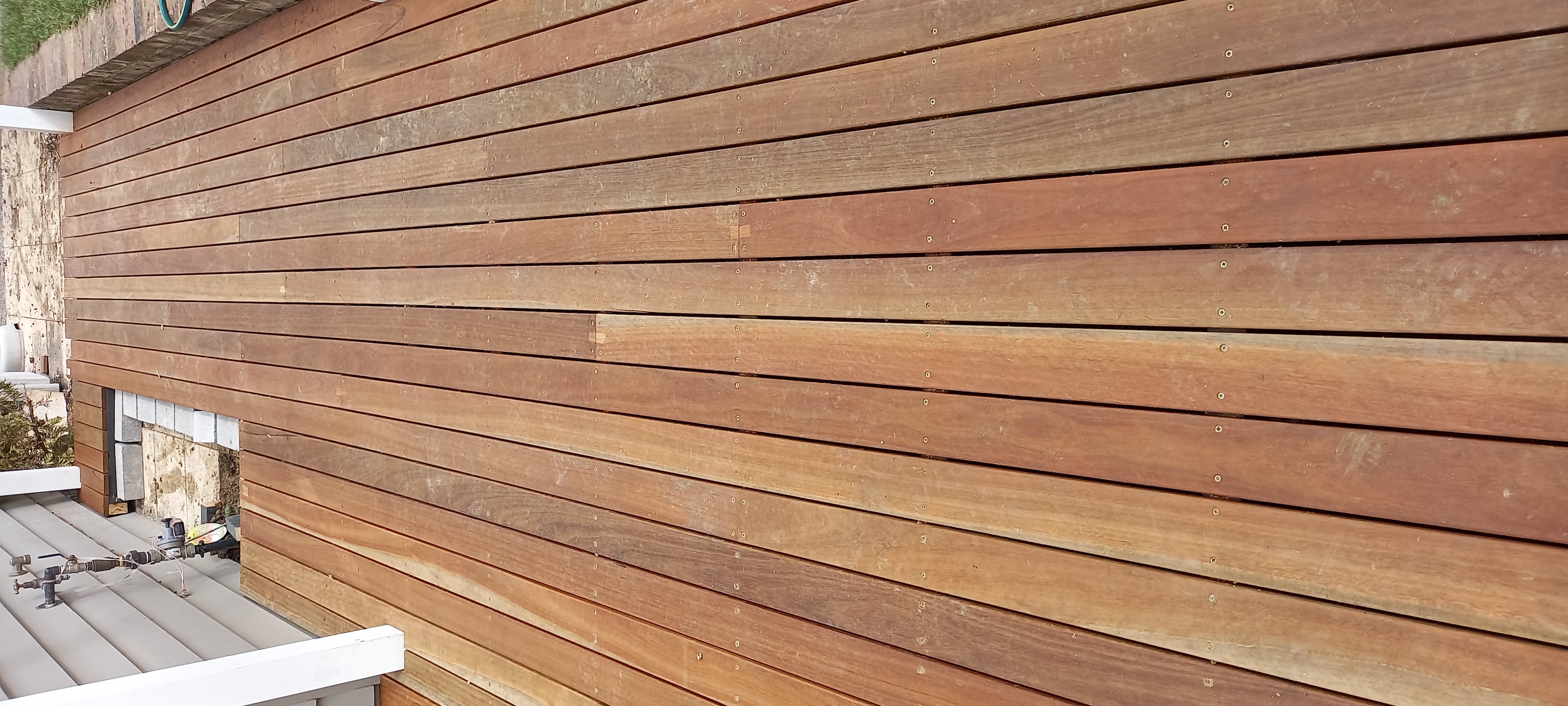
Decking materials compared
Merbau, spotted gum, blackbutt, treated pine framing and composite — how each behaves in Melbourne conditions.
Read guide → -
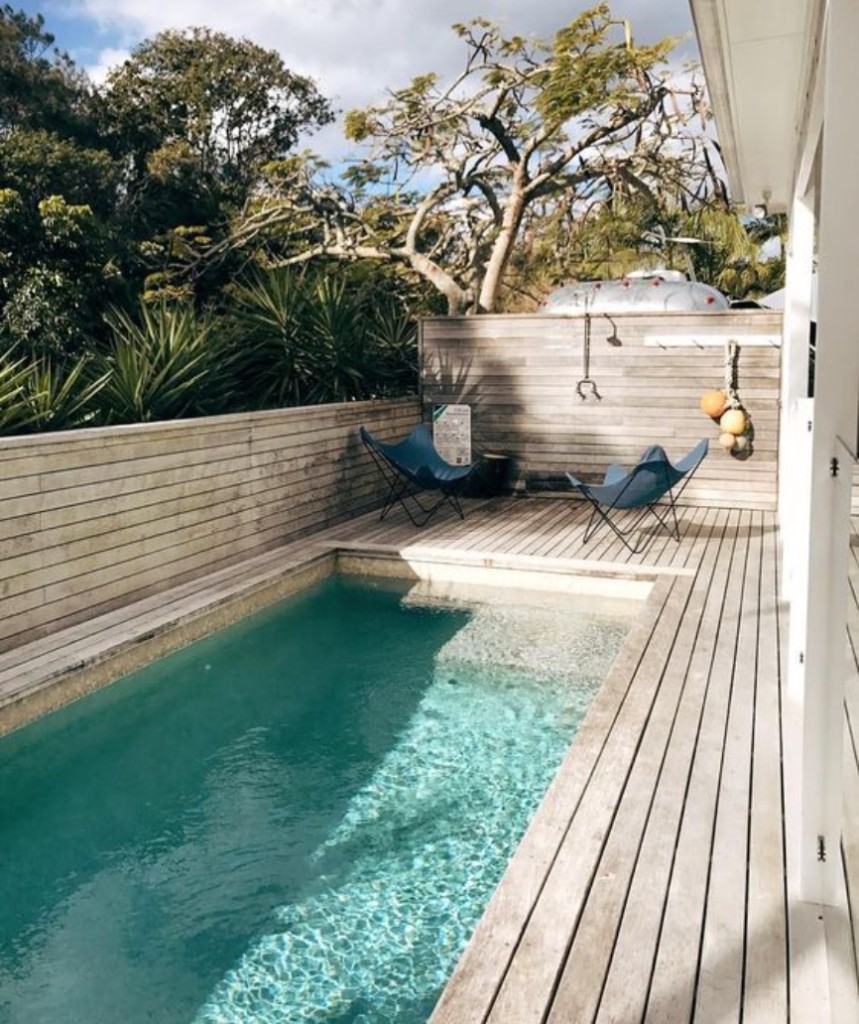
Pool decking cost
Wet-area detailing, slip, drainage, coping transitions and access panels — and why pool decks cost more than a simple alfresco.
Read guide → -
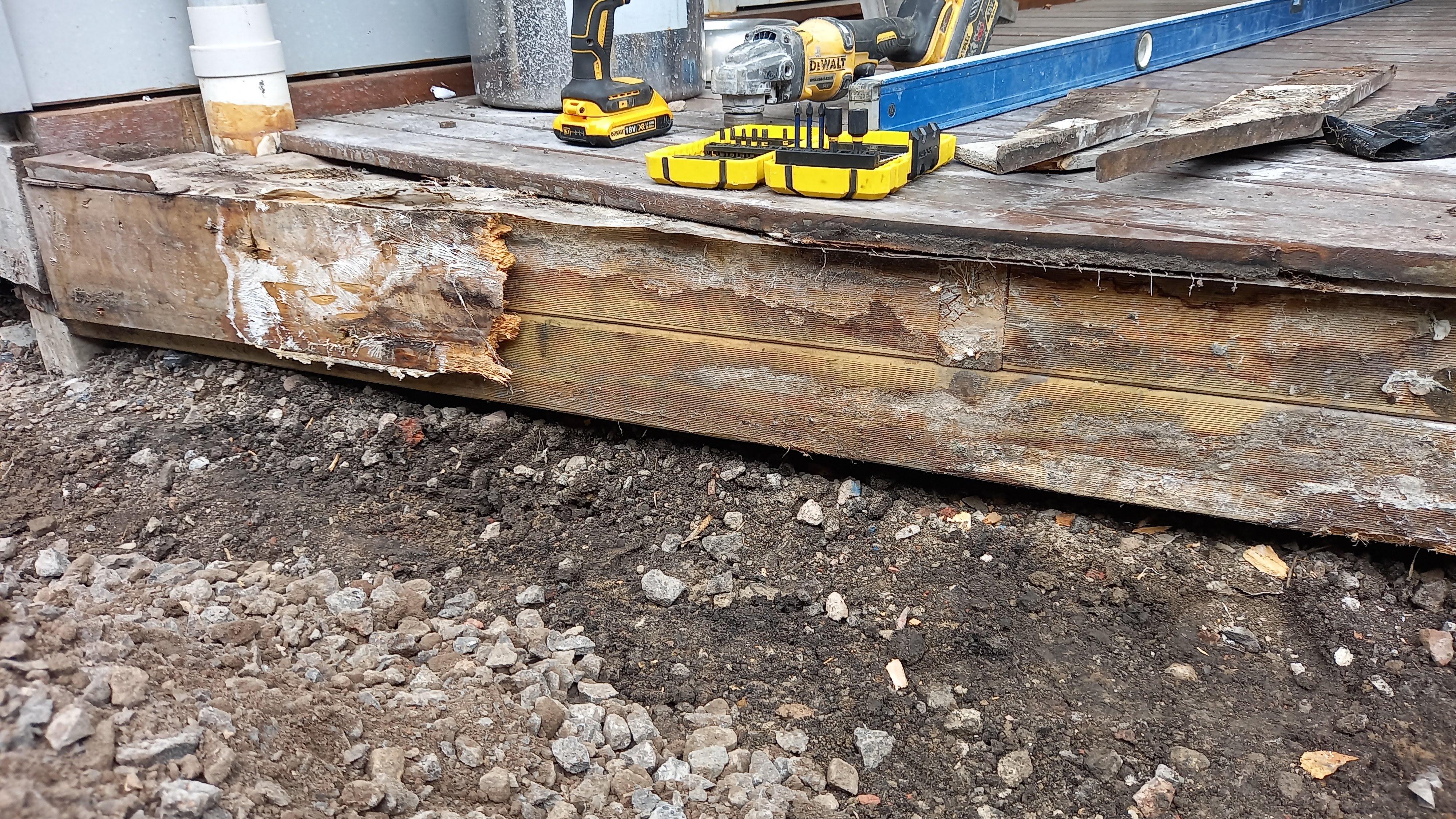
Common deck mistakes
Poor ventilation, weak subframes, wrong fixings and decks built too low — the errors that turn a cheap deck into an expensive repair.
Read guide → -
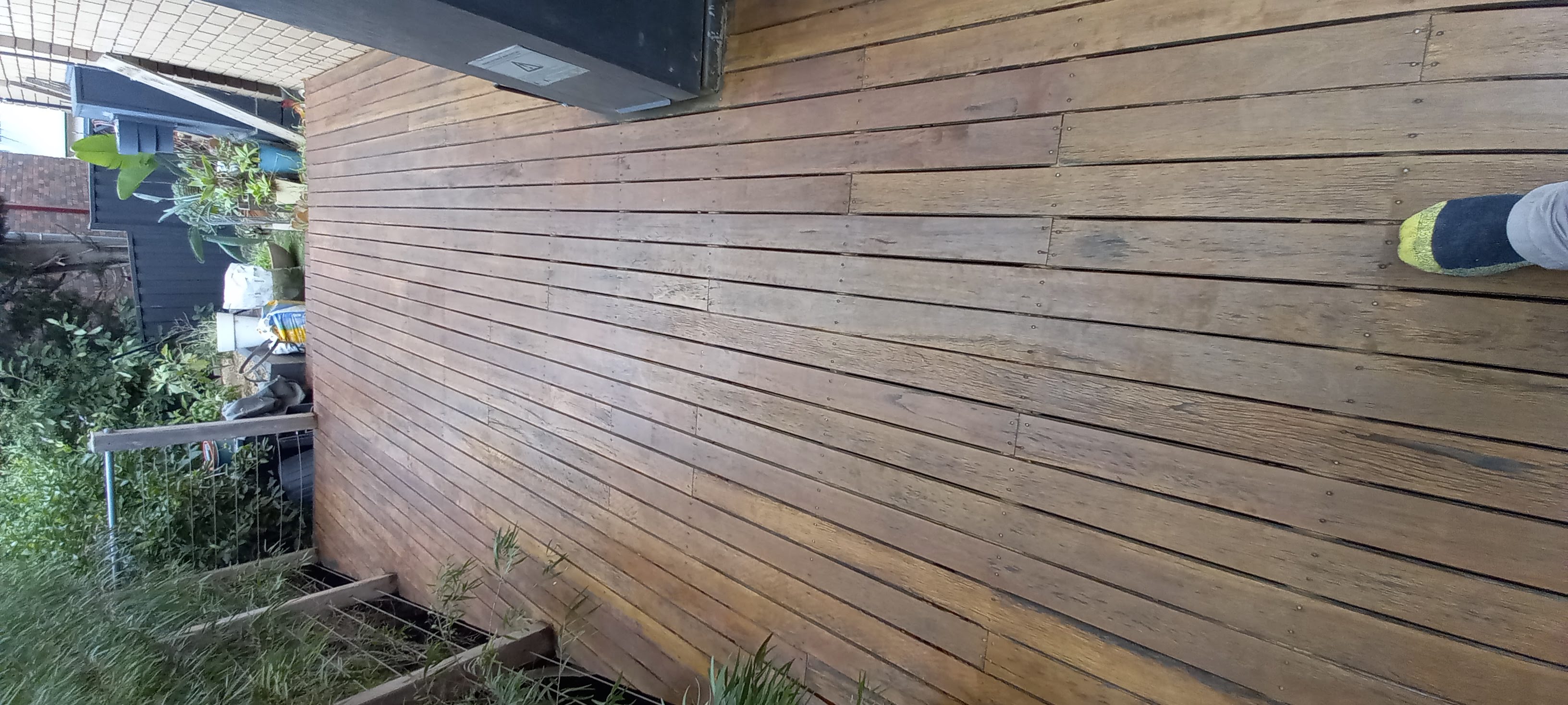
Finishing and maintenance
Oiling, re-coating and the upkeep that decides how a timber deck looks and lasts after the first few summers.
Read guide →
What affects deck cost?
Six things move a deck quote more than the board ever will. Get clear on these and you will understand most of the difference between any two prices.
- Height off the ground The biggest single split. A raised deck needs deeper footings, posts, bracing, a balustrade, stairs and usually a permit. A low deck is cheaper to frame — but it still has to breathe and drain.
- Ground and footings Reactive clay, fill, slope or rock all change how deep and what type the footings need to be. You pay for what is under the deck even though you never see it.
- Site access A narrow side path or no rear access means everything is barrowed by hand and machinery may not fit. Labour climbs fast when nothing can drive in.
- The subframe Footings count, joist size and spacing, and framing treatment level. This is where cheap quotes quietly save money — and where a deck is won or lost.
- Timber, fixings and finish Species, board profile, hidden vs face fixings, hardware grade and the coating. A smaller slice of the total than most people expect, but it sets the look and the upkeep.
- Stairs, balustrade and edges Steps, compliant balustrades and pool or step edges are real line items that are easy to leave out of a sharp-looking quote.
Why cheap decks usually cost more later
The lowest quote rarely describes the same deck as the others — it describes a lighter one. The savings come out of the parts that keep a deck alive, and they come back as repairs.
- Fewer or shallower footings and a lighter frame feel fine on day one and bouncy within a few years.
- Wider joist spacing saves timber now and lets boards flex and cup later.
- Cheap fixings rust, stain the boards and let go early — and redoing them costs more than doing it once.
- No thought given to ventilation or drainage means trapped moisture and a frame that rots from underneath.
- A deck built too low to the ground is the cheapest to lay and often the first to fail.
Timber and material choices
There is no single best board. We build mostly in natural timber because, detailed properly, it lasts and ages well — but the right choice depends on your budget, the look you want and how much maintenance you will genuinely do.
- Treated pine: the cheapest board and the standard framing timber. Fine when detailed and maintained, but softer and shorter-lived as a deck surface.
- Merbau: a dense, durable hardwood at a sensible price — just manage the tannin bleed when it is new.
- Spotted gum and blackbutt: hard-wearing Australian hardwoods at the higher end, and our usual recommendation for a deck meant to last.
- Composite: we don't use or recommend composite boards — click the link to Compare decking materials to understand why.
Pool, alfresco and raised deck cost factors
Not all decks are the same build. Where the deck sits and what it has to deal with changes the structure and the detailing — and the price with it.
- Alfresco / low-set deck The simplest build, but it still needs clearance to ventilate and drain. Done too low with no airflow, the cheapest deck becomes the first to rot.
- Raised deck Posts, bracing, a compliant balustrade, stairs and often a permit. More structure and more compliance — the right call when levels demand it, and the most expensive band.
- Pool deck Wet-area detailing, slip-aware boards, stainless fixings, coping transitions and access panels over services. Usually more than a plain alfresco deck — for good reason.
Questions to ask before accepting a decking quote
A good builder will answer these without hesitating. The answers are also how you compare two quotes on what they actually build, not just the bottom line.
- How many footings, how deep, and what type — and how were they sized for my ground?
- What size are the joists and how far apart are they spaced?
- What treatment level is the framing timber, for in-ground and above-ground use?
- What fixings — face or hidden, and what grade (stainless near a pool or the coast)?
- How does the deck ventilate and drain, especially if it sits low?
- Are stairs, balustrade, demolition and finishing in the price, or extra?
- How does the deck meet the house, the paving and the rest of the yard?
Footings, subframe, airflow and drainage decide whether a deck still feels solid in ten years — they are not details you add after the boards are down.
Planning a deck in Melbourne?
Speak with Made By Mobbs Landscapes about deck structure, timber and detailing — built as part of the whole backyard, not a board count on a quick frame.
Estimate Your Decking Construction Cost